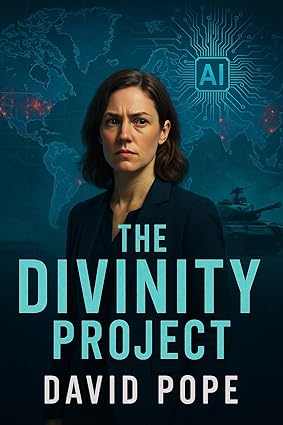
A hyperreal political thriller that sounds the alarm but never surrenders to despair.
What happens when fanaticism trumps reason, or when speaking truth is counted as treason? Karrie Chapman is about to find out. This pragmatic woman might be politically uninvolved, but she is not unconcerned about world events. To block out the noise, she has chosen to focus on her young family after stepping back from a high‑stress, high‑pressure career in the tech sector. But when Homeland Security shows up at her doorstep with a request that she can’t exactly refuse, Karrie is pulled back into her area of expertise. Whisked away from her family to a top-secret site, she gets to know Alton Mulder and the youthful team devoted to his impressive AI system. Karrie is flattered to be called upon and intrigued by the possibilities, but she quickly realizes that the race to innovate is a dangerous game that might have no winners. Superpowers are on the cusp of secretly developing and weaponizing a super AI. Politics aside, Karrie recognizes that this power shouldn’t be left in enemy hands, but who should be at the helm of a project that is reshaping life as we know it? As she digs into Project Divinity, it becomes difficult to tell who or what might be the most catastrophic variable, but there is no underestimating the threat. The truth needs to come out, but if Karrie can’t find the right audience, it will mean certain disaster for herself, her family, the country, and the global population.
Against a threat built on code and control, a reluctant hero must rely on paper, pens, handshakes, and instincts in The Divinity Project. Even though the novel’s tech team knows their science inside and out, and Karrie is just as fluent in the jargon, the explanations land with enough clarity to keep even tech-averse readers engaged. With its built-in moral quandaries and unlimited possibilities, superintelligent AI makes the perfect fodder for a contemporary techno-thriller. After all, who among us hasn’t longed for one more concerto from an iconic composer or a cure for diseases like cancer or dementia? But there’s always another side to the coin. Who decides the guardrails that keep these breakthroughs from serving only an elite few? How invasive is too invasive? The author has considered these questions, this novel wrestles with them, and audiences will confront some uncomfortable realities in a story that could have been plucked from recent headlines. A significant thematic element includes megalomaniacs in positions of authority and the sycophants who feed their ambition. In a war for technological domination, they make for formidable adversaries, though they aren’t the only ones. With such pointed commentary, some might call it paranoid or cautionary, but really, this engrossing novel is a level-headed warning shot aimed at the hearts of readers willing to question the institutions they rely on. Believable characters, masterful storytelling, an impressive command of technology, and a fear‑inspiring plot anchor The Divinity Project, a hyperreal political thriller that sounds the alarm but never surrenders to despair.